The premise that all AVRs sound the same, or that the differences are vanishingly small is a bit too generalized to be accurate. There are several reasons an expensive AVR could sound better than a cheap one. Here are some of them.
Power output. It’s not just the rated power per channel, it’s the rated power, dynamic headroom (the ability to handle peaks above the rated power) and the ability to drive multiple channels at the high dynamic peak level simultaneously. The most expensive single section of an AVR is the power supply. An inexpensive 7.1 channel AVR (8 channels), rated at 100W/channel is incapable of producing 100W from all channels at once. That would require an 800W power supply, minimum, and they don’t put those in cheap AVRs. The cost of such a power supply might easily exceed the total cost of some of those receivers. As the price of receivers goes up, one thing that improves is the power supply. Even $2000 AVRs sometimes can’t deliver full rated power to all channels simultaneously, but the better and more expensive the power supply, the closer to it they get, and can do so in at least the front 3 channels. It’s rare that a film soundtrack would require that ability in all 8 channels, especially if you have efficient speakers, or play at low volumes, but with less efficient speakers in a larger room, and playing sound at ‘reference levels’, the ability to drive all channels with full power becomes an issue.
Using the preamp outs and separate power amps can accomplish this goal. Any two channel power amps of decent quality is capable of delivering full power to both channels simultaneously, so using 4 external power amps results is higher simultaneous peak capability.
As a point of reference, THX Ultra2 Certified receivers are tested with all channels driven, and you won’t find one with less than 100W per channel, typically more like 130. THX Ultra2 is a certification that includes all audio components in a room of up to 3000cu ft. By contrast, THX Select2 receivers are power tested with only one channel driven at a time, and must meet lower peak current ratings. Select2 products are intended for rooms up to 2000cu ft, and are meant to be more affordable.
Could you hear the difference between an Ultra2 and a Select2 receiver? That depends on the size of your room and your speaker efficiency, but if played to THX reference levels, the answer is yes. More importantly, could you hear the difference between a THX Certified product and one that isn’t? Remember, it costs real money to design, develop and certify a THX product, money you wouldn’t have to spend otherwise on a similar product. Again, the answer is “yes”, and that would be not only for reasons of good and certifiable design, but also for reasons of THX processing in the line level stages.
Another power-amp factor, which is usually not specified, is output impedance, which directly relates to the amp’s ability to drive a complex load such as a multi-driver speaker. Low cost amps may have higher output impedance, and if the speaker’s load impedance is complex (most are), they will sound different than if driven by a higher cost, lower output Z amp stage. The relationship is not strictly cost, but in general, lowering output Z increases unit cost. Damping factor is directly related. Higher damping factor results in more ability of the amp to control the speaker, a generally desirable trait.
The line level stage in a receiver has little to no audible effect, and that includes the DACs. With the exception of exotic over-sampling techniques, noise shaping, etc., the fundamental limit to performance is the digital word length and sampling frequency. At 24 bits, a digital system is about at the limits of what can be done in the analog domain, in terms of noise and distortion, but at 16 bits, analog circuitry can easily surpass the performance of the digital system. By the way, noise is not a subjective quality. It is clearly audible, and the audibility of noise is well known. The audibility of harmonic distortion is also well known, but the threshold of audibility is not widely known to consumers. We are used to seeing audio devices with distortion figures in the .01% range, yet the typical listener only begins to hear odd-order harmonic distortion well above 1%, and that depends on the signal type. Even-order harmonic distortion remains inaudible up to 10%! Inter-modulation distortion (IMD) is perhaps more obvious that THD, but then it still has to be in the single whole-number digits to be heard, and is also signal dependant. Given all those figures of the threshold of audibility of distortion, no receiver should have distortion that would affect the sound subjectively. And you can include TIM in that too, it just shouldn’t be a problem.
This reduces the possible audible differences in receivers to three areas. First, the power supply’s ability to supply power to all channels under high demand, second, the amplifier’s ability to interface with a complex speaker load, and third, DSP functions in the line stage, like special processing, EQ, Audyssey, THX processing, and so on. Those functions depend on DSP programming, which is not at all fixed or even similar brand to brand, beyond standardized functions like Codecs and ProLogic, etc., and are all DSP functions are likely to be audible, most by design. DSP firmware of higher sophistication is more expensive to produce, and could potentially raise the price of an AVR. And, personal preference for certain DSP functions could drive a receiver choice.
So I surmise that you can get audible benefits from more expensive AVRs. Cost justification is the subjective part. For me, I hate to replace audio gear. I own my audio stuff for at least a decade at a time, barring radical changes in function (like the advent of 5.1, for example). I like my stuff to be built well, and to be as reliable as a wood-burning stove. That saves me money in the long run, but costs me money in the short-term. Sort of like buying a Toyota over a Ford. Sure it costs more, but if it lasts twice as long, it’s actually cheaper.
Saturday, 13 December 2008

Monday, 3 November 2008
Does DTS vs DD really something that matters ?

 Prior to this .. I'd always mistaken that DTS is actually belong to the same company as Dolby. Well it's not. This is a confession of a first time owner of a DTS/DD capabler AVR, the Harmon Kardon AVR1550. Honestly when playing a DTS and DD DVD movie .. i couldn't tell a difference between the two format. Both having a 5.1 Surround ... although from what is written in the Internet ... DTS is supposely superior due to higher bitrate or whatever that is .. still I couldn't tell a difference.
I'm not really a movie junkies per se, but I am a hardcore PS2 gamer whenever I'm off work. Unfortunately PS2 Pro Logic II, DTS or DD are scarce and even if those games that have it .. it's only during cut scenes. Who dig a cut scenes anyway ? Perhaps if it was full game .. then probably i would have notice the subtle differences.
But I do notice a huge difference in audio fidelity if I'm watching those movies without 5.1 surround. It sounded flat ... so no umpph .. Hence, what they shouldn't compare between DD or DTS ... it should be what AVR and what Speaker combination that counts. =)
Friday, 31 October 2008
Sound Fusion

Buying a new home theater system is a definitely a big decision and with an abundance of choices out there, how do you decide which one is the right one for you ?
At Sound Fusion, we can provide the information you need in finding the most suitable HT set according to your available budget.
We believed that an expensive HT doesn't always beat a cheaper one. The correct formula is how to match the speaker with the amplifiers or receivers.
We carry acoustical brand of exceptional qualities such as JBL, Harmon Kardon, Denon / Marantz, Infinity, MS and many more. Besides speakers and receivers, we have a wide selection of quality cabling solution (QED, VDH) plus acoustical treament foam such as diffuser and absorbers by Auralex.
You are invited to come to our shop very own demonstration room to try out the equipment hands on .. or ears-on to get the feel of the receivers paired with the desired speakers.
Unsure how to build that dream home theater at home ? Allow us to plan it for you. Even a good HT won't sound the way it should without proper placement and room treatment.
Visit us today at the map below.

Acoustic Treatment
Acoustic Treatment is crucial for all types of rooms that has sound system installed. Without proper acoustic treatment, you are listening to the "room" rather than listening to the sound system. Sound waves travel in all direction and if not treated correct, can create echoes, reverberation, resonance and reflection. No matter how good your sound system is, you are actually listening to the room more than listening to your expensive sound system.
I am not going to talk about soundproofing here. Meaning to say isolate sound from your next door neighbour or building a sound tight room. What I will be explaining in this post is to simply explain the basic acoustic treatment you can do to improve your Home Theater Room.
To make things simple, I will just briefly talk about 3 types of acoustic panels that will help you with your home theater room. The three types are Sound Diffuser, Sound Absorber and Bass Trapper.

Diffusor does not absorbs the audio waves but diffuses the waves and spread it out into different directions in your home theater room. It prevents audio waves from travelling/reflecting to the listener directly which creates hot spots or nulls in the room. It widens the sweet-spot in your room, thus making the room sounds wider than it physically is which in term give you more 3D sense of openness. DIY product can be egg trays which is really cheap but doesn't look really nice in a well designed home theater room.
Application: First reflective point for the front speakrs. Side walls, Ceiling, behind speakers or behind audience.

Absober simply absorb audio waves and it is non reflective like diffusor. It is effective in alleviating slap and flutter echo. Effective use of absorber can turn a huge room into a suitable acoustic environment. The two most commonly-used sound absorption materials are high-quality acoustic foam and specialized acoustic fiberglass. Not the stuff you can easily get from IKEA or your local hardware shops. I've tried using local hardware shops material like high density rock wool and DIY the panels myself. But the cost per piece is almost the same as those professional panels made by Auralex. Plus, the weight of the DIY panel is so much heavier and you can't really get the equal standard of each panels. Plus mounting the DIY panel onto the wall needs drilling whereas Auralex product comes with a special glue where you can simply apply a single dot on each corner and it will stick on all surface strongly.
Application: Behind Audience, Side or behind Speakers depending on the room layout.

Bass trap acts almost like acoustic absorber that functions to capture low frequency audio waves. Low frequency audio waves are very long and strong which is also the hardest to control. You can either block its transmission or absorb it to clean up the low frequency within a room. Improper treatment of low frequency will affect the sounding from the bass driver of the speaker or subwoofer. Bass traps provide a means to control room reverberations at low frequencies, a part of the audible bandwidth especially troublesome when critical listening venues are located in small rooms. Controlling low frequency audio waves is harder than controlling mid or high frequency waves. With Auralex bass trap, you can be rest assured to get the right solution because of the material used in Auralex bass traps.
Application: Corners
Conclusion, to properly treat your home theater room, you first need to know what is the problem of the room. It is unncessary to stick the panels all over the room because you still need the sound waves to roam freely but in a controlled manner that can help them sound better at your sitting area.
Check out the sample products at Sound Fusion Sdn. Bhd. and get the information you need for your acoustic treatment. We can also recommend the cheaper way of using DIY products :)
Friday, 24 October 2008
Component Video
All conventional methods of sending an analog video signal from one device to another involve a few basic types of "information". These information are basically grouped as scan, brightness and color. Unlike RCA composite cable which carries a single lower-quality signal, the component cable which carries picture information as three separate higher-quality signals — typically luma and two chroma components. Another format is the S-Video which carries the video data as two separate signals, luma (luminance) and chroma (colour).
To sum it up, component gives you the best image quality compared to the other two. For most consumer-level application, an analog component cable is used while those higher end one tends to slowly move to it's digital counterpart. Component video is capable of carrying signals such as 480i, 480p, 576i, 576p, 720p, and 1080i.
 Van Den Hul (Holland) Compolink Component Cable
 QED Quinox Component Cable
To sum it up, component gives you the best image quality compared to the other two. For most consumer-level application, an analog component cable is used while those higher end one tends to slowly move to it's digital counterpart. Component video is capable of carrying signals such as 480i, 480p, 576i, 576p, 720p, and 1080i.
 Van Den Hul (Holland) Compolink Component Cable
 QED Quinox Component Cable
Why the need for quality component cable ?
A component cable works optimally if the cable manage to supply 75 ohms after noise attenuation or any impedance tolerance that might have occurred along the way. This is why quality component cables tends to have larger cables than those ciplak China ones. It's easier to control impedance tightly with a larger dimension cables instead of tiny one.
Second factor would be the shielding. Any video connector is susceptible to electrical noise which come from a variety of sources, which can be cause from transformers, computer and even florescent lights. The composition of the shield in a component video cable will determine how effective it is at preventing interference. Best type of composition would be a heavy braided coupled with a full-coverage foil such as aluminum.
To sum it up, a cable with tight impedance tolerance, effective shielding, adequately-sized for the run and terminated with mechanically solid connectors that make good contact with the equipment jacks and don't do too much to alter the impedance of the whole assembly will outperform anything else on the market.
Anyway, talk is cheap, do drop by to visit us at Sound Fusion Sdn Bhd located at 3rd Floor Wisma Satok, Kuching, Sarawak, Malaysia to see, feel and hear it with your own senses.
You may call Tel: +6 082-420020 for further inquiries.
Second factor would be the shielding. Any video connector is susceptible to electrical noise which come from a variety of sources, which can be cause from transformers, computer and even florescent lights. The composition of the shield in a component video cable will determine how effective it is at preventing interference. Best type of composition would be a heavy braided coupled with a full-coverage foil such as aluminum.
To sum it up, a cable with tight impedance tolerance, effective shielding, adequately-sized for the run and terminated with mechanically solid connectors that make good contact with the equipment jacks and don't do too much to alter the impedance of the whole assembly will outperform anything else on the market.
Anyway, talk is cheap, do drop by to visit us at Sound Fusion Sdn Bhd located at 3rd Floor Wisma Satok, Kuching, Sarawak, Malaysia to see, feel and hear it with your own senses.
You may call Tel: +6 082-420020 for further inquiries.
Thursday, 23 October 2008
Mordaunt Short Genie Home Theater Set

Mordaunt Short Genie, 5.1 Satellite Speaker System running at 100watt each comes together with a 10" active subwoofer that give you enough punch you need for a standard living room or even a room if combined with the correct av receiver.
From the look of the center speaker, it looks like the creature from E.T. It looks small from
the picture. Once you grab hold of the satellite, you will understand this is not child's play. It's one of the heaviest satellite speakers that I've grabbed hold of before. Compared to JBL or Harman/Kardon or even the Infinity satellite that I have in my shop, Genie is the heaviest among them all.
Each satellite comes with its own stand which can be wall mounted. Meaning no need to spend a single penny more for optional stands when you need to wall mount them. Optional floor stands are priced at msrp RM499. Each piece of stand weighs roughly 6 kgs with solid metal based. Speaker cable can be easily run thruogh the hollow pipe. The stands come with screw on spikes too.
As for performance, Genie definately out-performed most of the satellite I've seen.. For the price tag of msrp 3999, you will definately have hard time finding an up to par system as compared to Genie. Throw a Marantz SR6003 to match Genie, you will probably not be able to tell that those "sounds" are coming from these E.T. look speakers. With the quality built on these babies, you can be assured that it will last you for years to come. Why get those plastic satellite systems from consumer brand? Get your Genie now!!
Experience it yourself at Sound Fusion Sdn. Bhd. now.
QED HDMI Cable Performance Range
HDMI = High Definition Multimedia Interface is a audio/video interface capable of transmitting uncompressed digital streams at very high speed (up to 10.2 Gbits/sec). So it's a high speed audio/video cable ...So?
There are various versions (standards) of HDMI cable from 1.1, 1.2, 1.2a, 1.3, 1.3a, 1.3b1,1.3b2, 1.3c...am I confusing you now? Don't worry, just think of the different versions being improvement over the data transfer rate. The latest and most common with our 2009 Denon and Marantz supports version 1.3a which improves both speed and video clarity. Other than transfering audio/video stream, it provides content protection technology by encrypting data being transferred.
In order to make full use of the HDMI interface, you need to have a HD Ready or Full HD capable video device and of course an AV Receiver that supports the latest HDMI standard. With HDMI, you can get the most out of your Bluray media being displayed on your LCD/Plasma/Projector and be able to output the DTS-HD or DD-HD audio to your home theater system.
For Video output, there are several standards as followed:

A quality HDMI cable will gives the user lossless audio/video streaming. For example, a good cable from QED Performance range.
Always opt for quality cables from brand names like QED and Van Del Hul. No doubts, there are many branded cables which are made in China (OEM products). That's why at Sound Fusion Sdn. Bhd., we only choose cables that are Made In UK, Netherland or USA. Visit our shop for free consultation and your cable needs.
Stop buying clone cables from electrical shops elsewhere or even some of the brand name Centers. You are paying almost the same amount outside and you get clone cable. Spend a little more and get Genuine products from our Award Winning Cables.
Tuesday, 21 October 2008
Interconnect and Speaker Cables
Ever wonder why you always get the FREE composite (yellow rca cable) cable from DVD or TV manufacturer rather than good quality cable or interconnect cable? The reason is a good quality cable can cost more than your RM200 - 300 DVD Player.

I always get the same question from most customers... Does the cable really make a big difference? I will always respond with the same answer... " If you have a Ferrari, and I ask you to drive in Kuching, will you be able to fully test out the performance?". Of course NOT because there's a bottle neck in our road. Same as for audio/video cable. The bottle neck in the cable restrict the passing through of audio/video signal due to foreign particles in the copper or silver.
It is simply that video signal will not be able to run through a poorly constructed FOC video or audio cables that you get in the box of dvd or TV. With good quality and branded speaker cables and interconnect cables, you can rest assure that 100% of the audio or video signal from your "source" will never be lost.

When I talk about buying cable, I use the word "INVEST" ..meaning to invest in good cable. Good cable is 99.999% oxygen free, you get 99.99% pure copper or pure silver which will last you for years to come. Unlike cheap cable that has a mix of other metal from somewhere else. After several months or even weeks of usage, your sound or video signal gets degraded and you are wondering why your Full HD LCD or Plasma is not getting the best performance from bluray dvd.

Prices of cables usually goes up rather than drop because of the price in the copper and silver. There are so many types and brands of cables, original branded and clone branded. So be aware of what and where you are buying your products. Come to the right place to get your audio video cables. Don't think if you are buying the cable from the supermarket or even xxxx center, you are getting quality cables. I've seen xxxx center selling nice looking cables that are china unbranded stuff. Why pay for that kind of price when you can get branded stuff from QED and Van Del Hul.
There are many types of cable and interconnects such as RCA, S-video, Component, HDMI 1.1, 1.2, 1.3, 1.3a, optical, etc. I will probably need to explain all of them in my next article. So stay tuned .....
Home theater system, stereo system, karaoke system
If you are looking for Home Theater, Stereo System, Karaoke System or want to build a home theater room, please do not hesitate to contact us for free consultation.


Mordaunt Short Genie 5.1 Speakers, Mordaunt Short Alumni 5.1 Speakers, and few other brand names.

Mezzo Series, Rega Apollo CD Player, Rega Brio3 Integrated Amplifier, Denon AV Receiver.
Rega Apollo Top Loading CD Player
Why Apollo CD Player?

Rega is famous with its turntable and for CD Player, Apollo is one of its brilliant invention.
The world has moved on since then, for better and for worse: better in the sense that digital sound has continued to improve, worse in the sense that the major corporations with the technology for making integrated digital control systems-the basic servo and data-control chipsets-have shifted their focus toward DVD and away from the humble music-only compact disc. That state of affairs has prompted Gandy and company to tap a different technology source, and to launch an entirely new player: the msrp RM4,599 Rega Apollo.
Rega Apollo incorporates more than 20MB of memory, along with true 32-bit processing capabilities. That's several times the power of early digital control systems. The CD comes with a great operating mechanism and a better power supply. It supports MP3 playback as well thought audiophile seldom opt for mp3 compressed audio. But you never know when you need this feature so it's always better to have it :)
The Apollo is built into the same casework as the Rega Planet, with one key difference: The new player's transport holds the disc with a three-point ball chuck instead of a magnetic puck. That means the motor has less mass to spin, so the disc can accelerate and decelerate with greater ease. It also means that Rega's already elegant transport lid is now a single, undisturbed expanse of smoked Plexiglas-which looks very nice indeed.
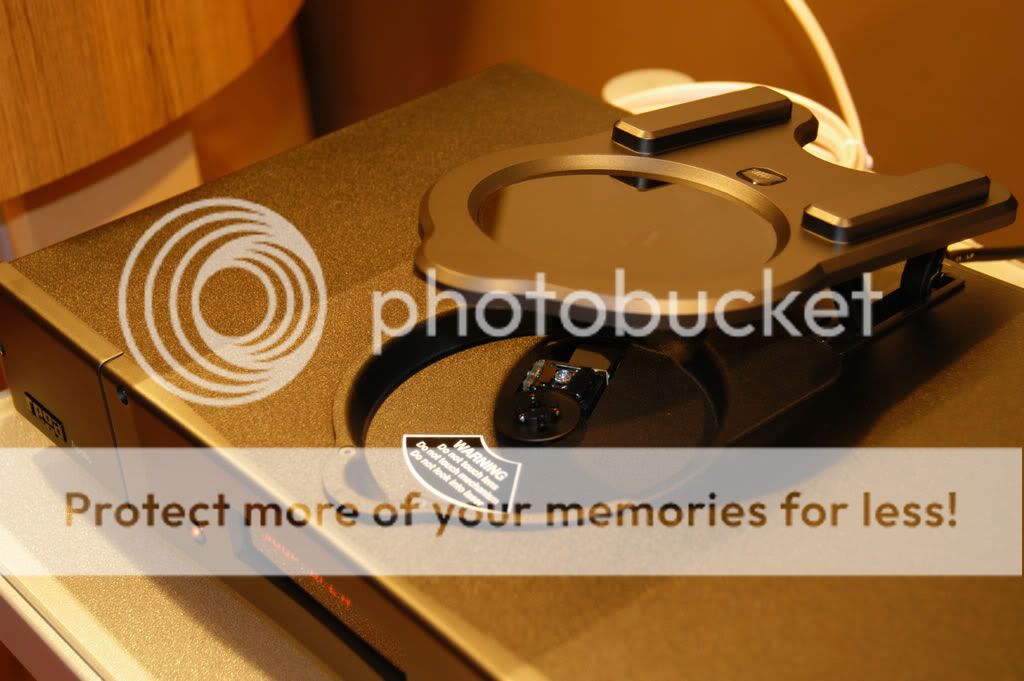
The Apollo's transport, manufactured by Sanyo, is compliantly suspended from the upper portion of Rega's standard chassis of cast aluminum alloy. The D/A converter is Wolfson's top-of-the-line WM8740, a dual-differential chip that operates in sigma-delta mode and supports word lengths of up to 24 bits. The output section, which is said to apply class-A amplification to a digital source component in an entirely new way, is Rega's own design.
Apart from all that, the Apollo is a straightforward thing, with a front-mounted board for the logic bits and a single main circuit board for all the rest, fastened to the bottom of the chassis alongside the smallish toroidal mains transformer. RCA and optical digital output jacks are on the rear panel for those who wish to use an outboard DAC, as well as the usual pair of phono jacks for line-level analog output. In addition to the mains switch, the front panel has only the most basic start, stop, and track-advance buttons, while those and a full brace of other user controls appear on the nicely styled remote handset-including a button that can be used to kill the display lights. To jump ahead just a bit: As with the same feature on recent CD players from Naim Audio, that last one really did make an audible difference for the better; all of my comments on sound quality below refer to the Apollo's performance with its display dark.
There is only one little tiny catch on Apollo, that is when a disc is loaded and the transport door closes, the player does not respond further. It will wait for around 5 seconds or so before you can press the PLAY button to start reading the track. The culprit, if you want to call it that, is the new Cambridge-sourced chipset and its attendant surplus of memory: Each time the user loads a new disc, the Apollo reads the whole of the CD's subcode data into memory, analyzes it (footnote 1) and then selects the most appropriate of four levels of error correction. That way, the music is never overcorrected per se, and the integrity of the original datastream is kept intact to the greatest extent possible.
Apollo sounds "Cleaner" as compared to few of the products I have heard. It is more "revealing" and speak out most of the tiny details within the CD track. I can now hear "more" on Apollo than other lower end CD player ( I mean audiophile range CD Player here; not the consumer brand DVD or cd player that you get from the electrical shop that sells fridge and aircond).
Be warned when you feed Apollo with recorded CD media or even odinary CD from the shop. Noises and even some background sound are visible. You can straight away tell if the CD media is original or not or should I say, good recording or bad. At times, I feel Apollo sounds a little too crisp in the high side. For the price tag of msrp RM4,599, is it worth the buy? I strongly recommend it. Hear it for yourself ...Visit Sound Fusion Sdn. Bhd. now.
Sunday, 19 October 2008
A Cinema at the comfort of your Home ...
A "Cinema" at the Comfort of your Home :)

More and more people are moving the cinema into their own house by building a Home Theater Room or integrating a set of home theater in their living room. There are many good reasons of doing so. Benefits being you can enjoy a movie at the comfort of house, pause the playback anytime you like when you need a toilet break, you don't have to pay for the VIP seat in the cinema and yet get a VIP seat in the best viewing seat or sofa. No more searching for parking, no need to worry about security when walking to the carpark after dark, no need to worry about the dirty seats in the cinema or oily smell on the headrest, no need to worry about paying extra on beverage and snacks, no need to worry about the dirty toilet when you need one, and lots more ...

Sound System in Cineplex is not always well maintain. Especially when you go to cineplex in Kuching where sound system are not being well maintained. Even the projector are suffering from dead lamp problem because of budget issues I guess. Noisy or broken sound are travelling everywhere in the cineplex. Very unfortunate that good recorded sound are not being output effectively. This is not how good sound is supposed to be feeded.
With your own sound system, you can control the sound stage and sound effect at a press of buttons on the AV Receiver. You can also adjust the ideal volume according to your hearing preference; increase the subwoofer level to give you more punch and low frequency (vibration in the room) whenever you like it. And the best thing of having a home theater at home is you can pay for the cost of a single DVD (RM6 ~ RM 59.90 depending on the quality) and the whole family can enjoy it together anytime you want. No need to wait for showtimes or queue up or stuck in the jam to get the tickets.
The pictures attached in this article are taken from my own HT room. DIY myself and almost completed but still need to add some acoustic treatment to the wall to improve sound quality by increasing sound stage while reducing stray sound reflection. A few final touch up and wall mount the rear speakers at the appropriate height once I've ran the speaker wiring. 1 Pair of floor stander for home theater, 1 unit for center. The extra pair of bookshelf speakers are for stereo system.

The room used to be part of my living room area and I partitioned it up to reduce the living area since I don't need such a big living area. Bigger living area means I need to have more furniture. After partitioned, it gives me a 15feet x 9feet home entertainment room. Got myself a two-seaters sofa for RM799. The two sliding doors are made of solid wood but I've laminated it with rock wool to improve sound proofing. Behind the curtain are my side entrance and windows. With the thick curtain, I am able to hide the doors and windows as well as improve acoustic to the room by reducing echo effect. Subwoofer is placed behind the sofa out of visibility.

System Setup
- Denon AV Receiver AVR-1909 (Year 2009 model)
- 1 Pair Mordaunt Short Carnival 6 Floor Standing Front Speakers
- 1 Pair Mordaunt Short Carnival 3 Bi-Polar Rear Surround Speakers
- 1 Unit Mordaunt Short Carnival 5 Center Speaker
- 1 Unit Mordaunt Short Carnival 9 10" Subwoofer
- 1 Unit LG 42" PG60UR Plasma TV (HD Ready 150Hz)
- PS2 with 80GB HDD
- 1 Unit LG DVD Player with optical out to AVR-1909
- 1 Unit china-brand DVD Player running stereo out to AVR-1909 for running low quality dvd
- 1 Unit Media PC running Media Portal RC3 for web surfing, photos and videos storage/playback, media recording
- 1 Unit Dreambox 500s Satellite Receiver
- 1 Unit Linksys Wireless Access Point
- Backup Power by a 600VA uninterrupted backup power unit
All audio/video output from PS2, DVD Players, Satellite Receiver, Media PC are connected to the Denon AVR-1909 AV Receiver. From the Denon AVR-1909, I run a 10 meters HDMI 1.3a supported cable to my LG 42" Plasma TV. Sound source are feeded to the AVR via optical or RCA cables. Video from PS2, LG DVD are feeded via component video cable while the rest of the video source are connected via composite (analog RCA) cable. All speakers are connected to the AVR using QED Classic 42 Strain speaker cable that is Made In England. Guaranttee to last for years to come without worrying about oxidization.
One good thing about using the new Denon AVR-1909 AV Receiver is that it will upconvert all digital and analog signal to 1080i or 1080P signal via a single HDMI cable. Meaning no more messy audio or video cables to your Plasma or LCD tv that supports HDMI input. Denon AVR also functions as a AV switcher so that you can simply put side the TV remote control; no need to switch between Video Input Sources anymore. Just use the Denon AVR to perform all the switching for you.
Any inquiry or plan to build your own home theater? Please contact Mr. Tan at Sound Fusion Sdn. Bhd. Tel: +6 017-808-9020 or +6 082-420020. We can provide the information you need prior to any renovation work to save hassles of running cable concealing work later.
Monday, 6 October 2008
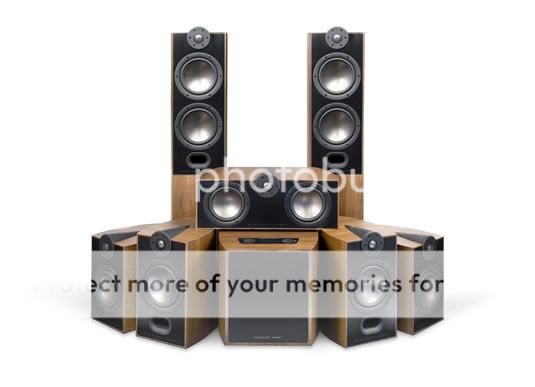
Mordaunt Short Mezzo Series
Finally arrived. Check out the performance of Mezzo Series by Mordaunt Short. Come Visit Us now or schedule for an audition.
Tuesday, 30 September 2008
Marantz CD 6002 Review
.jpg)
Over the years, Marantz have consistently churned out fantastic high fidelity audio equipments such as the CD 5001 and it's successor CD 5003 which was well received. Collecting a Star award from WhatHifi is only a testament to the sort of quality, Marantz CD 6002 have to offer for you, music lovers.
CD6002 CD player is the latest new CD player from the Marantz audio product development department. With technologies derived from the highly acclaimed OSE CD player Special series. Sound quality has dramatically improved after a critically look at the circuit concept and to all components, after which it is possible to determine where customization is needed. At the end of this detailed process the power supply lines are enforced and the audio circuitry is tremendously tweaked up. Every change will be proved by a listening session. This custom treatment gives a much more consistent response in entire frequency range. Musical reproduction is characterized by improved transparency and image, as well as tonal accuracy.
Pair it together with the Marantz PM6002 and Mordaunt Short Avant 902i, we have a winning Hi-Fi System.

SPECS
• Compatible with CD DA and CR-R/CD-RW discs
• Playback of mp3 and WMA files
• CD-Text on front display
• High quality DA conversion with CS4398
• Audio circuitry with Marantz HDAMs
• Customized audio components for best balanced audio
• Oversized transformer for stable power supply
• Display off function to minimize high frequency noise interference
• Gold plated stereo audio out
• Coaxial digital and Optical digital out
• Dedicated remote and Marantz D-bus
• Solid metal front and rigid chassis construction
Not sure what's right for you ? Question ? Needing services to build that dream home theatre room?
Pay us a visit at Sound Fusion Sdn Bhd located at 3rd Floor Wisma Satok, Kuching, Sarawak. Malaysia. Or call us at Tel: +6 082-420020 to speak to our sales team.
Listen to music, the way the artist intended it to be....
Monday, 29 September 2008
Harmon Kardon AVR 1550 Review - Affordable Classic AVR

Prior to this, I've never seen the Harmon Kardon brand being anywhere in Malaysia except West Malaysia. Particularly the audio shop at Sungai Wang .. or Harvey Norman would carry HK. I must admit that I'm not particularly familiar with AVR, Speakers or quality cables and stuff. I was more of a photographer than an audiophile freak. But I knew quality stuff when I see it or in this case hear it :)
Let me go way back to my university time, when I first bought a computer that came with a
 standard sound card and speaker .. I was less than thrilled. Back then I couldn't differentiate what's the fuss with having a quality sound card and speaker would do to enhance the overall enjoyment of the medium. Until I got my hand on counter strike. It was all the rage back then, a game whereby knowing where enemy is audibly makes a difference between life and death (in the game anyway).
I was using consumer level home theater system from Sony and some how the thing just sounded loud .. without clarity. The bass is good .. but I just couldn't hear what the actor was saying with that bass and treble and ultimately killing the mood of the movie. Luckily my friend just opened a HT shop that carry mid to high end HT system which might not be too familiar to hear unless you really are an audiophile freak. Over here general population only know Sony, LG, Samsung .. but when it comes to sonic enjoyment .. the names of Denon, Marantz and HK are synonymous with the terms "high quality sound". It wasn't long before I got my hands on the HK AVR 1550 which suited my tight budget.
 The AVR was paired with a 5.1 Epiphany Speakers which looks small but really solid and heavy plus it packs a lot of punches. Each of the Epiphany speakers consist of 2 sub speakers .. so basically you will have 10 speakers and 1 sub woofer in one single package. Pretty neat.
The AVR is fairly simplistic and quite easy to setup. This is a 2002 model so don't expect to see a HDMI connector here. :) I didn't have a LCD .. so obviously I don't need HDMI for now. Astro programming just really sucks on a LCD and Plasma anyway unless they go HD with their broadcasting. We'll just have to wait for Measat 10 for that to happen.
Onced setup I whipped out my favourite movie on DVD, the Matrix Reloaded, upon playing it the AVR automatically set itself to DTS depending on the DVD disc. You will need an optical cable to get DTS to be activated. When I press play, as I sink down on my sofa .. my heart was pounding at the clarity and fantastic boom from the subwoofer whenever Keanu Reeves pulls the trigger on his gun. Hehe .. man I love this movie.
Besides movies, I also enjoyed playing my HDD enabled PS2 console. Prior to this, I never hear how Dolby Pro Logic II sound like... lol. Again with the optical cable I could enjoy PL II on certain number of games. Do take note that PS2 games usually have the PL II enabled mostly on cutscenes only. One fine example is the GT4. The sound of roaring VTEC on a 03 DC5 never sound sweeter. =)
 Optical Cable(Sold Separately) behind the PS2
AVR 1550 Specs
If you would like to be part of the exceptional acoustical HT family, feel free to drop by Sound Fusion Sdn Bhd located at 3rd Floor Wisma Satok, Kuching, Sarawak. Malaysia to get your audiophile fix today. You know you want one of these.
Call Tel: +6 082-420020 for further inquiries.
Thursday, 18 September 2008
Denon AVR-2309
The Year 2009 Denon AVR-2309 monitors the structural elements of sound sources and uses Audyssey Dynamic Volume to adjust volume without sacrificing dynamic range. This AVR 2309 A/V receiver masterfully controls a variety of media for optimum playback of high-quality audio and video content.

Dolby TrueHD and dts-HD Master Audio decoders
Audyssey Dynamic Volume and Dynamic EQ
4 HDMI inputs (Audio and Video)
Versatile Entertainment
Identical quality and power over all 7 channels, 135W x 7ch (6 ohms)Discrete devices for ultimate performance in each block
The AVR 2309 has a new 32-bit floating point high precision DSP
Direct Mechanical Ground for stable drive
Compressed Audio Restorer

Audyssey Dynamic Volume and Dynamic EQ
4 HDMI inputs (Audio and Video)
Versatile Entertainment
Identical quality and power over all 7 channels, 135W x 7ch (6 ohms)Discrete devices for ultimate performance in each block
The AVR 2309 has a new 32-bit floating point high precision DSP
Direct Mechanical Ground for stable drive
Compressed Audio Restorer
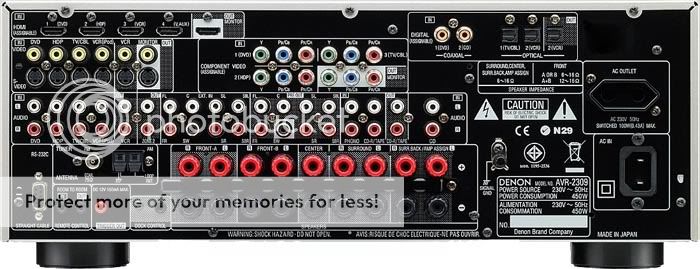
Denon's High Picture Quality Circuitry, to enhance enjoyment of existing DVDs -> Faroudja DCDi Video Processing
Discrete devices for ultimate HD video performance in each block
The Denon AVR 2309 has Digital Media Connectivity (Network Audio/Photo Ready/iPod Audio/Photo and Video playback)
Multi-Zone Capability (2 source/2 zone capability with fixed pre amp output)
The Denon AVR-2309 is available in Premium silver and black
msrp RM 3,999
Place your order now at Sound Fusion Sdn. Bhd. Tel: +6 082-420020. Discount Available.
Wednesday, 17 September 2008
Marantz CD5003 CD Player
Replacement of the Marantz CD5001 (5 Stars What Hifi Award) entry level CD player has been replaced by the new year 2009 CD5003.
The MSRP of this again 5 Stars What Hifi award CD Player is RM 1,299. The design is major change from CD5001 with the new look of Marantz flagship SA-7S1 CD Player that retails at RM 24,999.

The look definately looks more muscular and it weighs 5.1kg as compared to 3.7kg on the CD5001. Other than the look, there a quite a number of changes too.

It is using the DV11VF mechanism, TC94A70FG decoder that supports MP3 and WMA format. Utilizing an EI power transformer and consumes 14W as compared to 12W on CD5001. DAC remains the same CS4392. Marantz added the HDAM-SA2 for the output buffer. Channel separation is at 110 dB now as compared to 100dB.
For choice of color, there are Black and Silver-Gold. No more silver color.

For the msrp of RM1,299, it is definately a BEST BUY item and value for money on all the new features and construction of this new beast!
Why wait? Be the first to own it Now! Place your order now at Sound Fusion Sdn Bhd. Contact +6 082-420020. MSRP is before discount.
Tuesday, 16 September 2008
Loud means Good??
It is funny we always hear people who bought consumer brands sound system for a price ranging from RM699 to RM 5,000 showing off on how loud their system can achieve. They have no clue on what sound system or music system means to them. If they want LOUD loudspeakers, why don't just get those Big Black Box Speakers from P.R.C. that cost them RM199 a pair and blast the ear drums out of their neighbours.

Then comes another set of tiny speakers system that cost you over RM3500 a set that simply asking buyer to pay for their high priced advertisement fee. How can such a small speaker do anything good other than producing high frequency sound? Sorry no mid tone or low bass. All high out with only a subwoofer to conpensate for the mid and low. Why would somebody spends their money in this?
Behind the beautiful black finish with a touch of modern look lies compressed or recycle wood and plastic. They may look big and solid but it is light and hollow. When you send one to the service center, you usually get the same answer "I'm sorry but the main circuit board needs replacement" which usually cost you 60% of the new product. And most of all, they will charge you RM80 to RM120 regardless if you are going to repair it or not. Ouch !!
So, think twice before you consider buying these consumer brands simply because they are "cheap"? or "CHEAP"??
Denon AVR-1909 (5 Stars WhatHifi)
 Finally, a budget AV Receiver that supports DTS HD by Denon is out ..The Denon AVR-1909 is priced at RM3,299 msrp is a 7.1 channels AV Receiver that supports DTS-HD with video up-conversion to 1080p.
It supports not only Pro-Logic II, IIx, Dobly Digital EX, DTS Neo:6, DTS-ES, DTS 96/24, Dobly Digital Plus but also DTS HD, Dobly TruHD and DTS Master Audio.
The AVR-1909 features Faroudja DCDi video processing and up-conversion, breathing new life into standard definition sources. With 3 HDMI v1.3a input, it supports video upscaling up to 1080p from composite, s-video and component video source.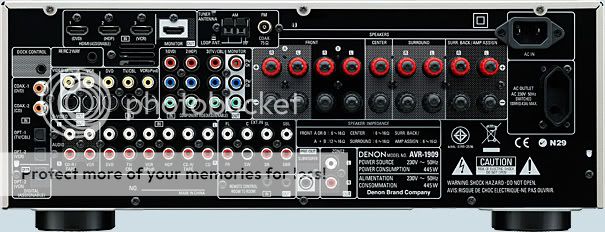
An extra feature in the AVR-1909 is the Audyssey Dynamic Volumne automatic volume-leveling system where it helps eliminate irritating swings in volume between TV shows and commercials. The Audyssey Dynamic EQ also ensure rich bass and smooth tonal balance, even at low volume levels.
Denon AVR-1909 is being rated with 5 stars by WhatHifi.
So? Why wait? Get it at Sound Fusion Sdn Bhd located at 3rd Floor Wisma Satok, Kuching, Sarawak. Malaysia. Tel: +6 082-420020
Denon AVR-1509 (Year 2009 Model) is HERE !
The all new Denon AVR-1509 (Year 2009 model) is here. When it comes to home cinema sound, Denon is one of the best in the home theater brands. Denon has been awarded with many WhatHifi awards (whathifi.com) with its high end receivers and amplifiers. Nevertheless, Denon has never neglected the lower end market and by providing entry-level models such as this AVR-1509 at an affordable price of RM1,799 msrp, most of us can enjoy quality sound from this solid built AV Receiver without worrying a bigger hole in our wallet.
Like the previous model AVR-1508, this is a 7 channels AV Receiver that produces 75watts (8 ohms) x 7 channels power. You get to enjoy DTS surround sound, Digital EX, ProLogic II/IIx, ES Discrete6.1 and ES Matrix 6.1 sound. It supports 2 HDMI 1.3a input and 1 HDMI 1.3a output for your LCD, plasma or project with HDMI input. 
The only downside of this AVR-1509 is that it does not come with the video upscaling features as compared to the higher model AVR-1709. There is no audio transfer via HDMI from your Bluray dvd player. The component video bandwith is also rated at 30Mhz only and there is no bi-amp supports for your speakers.
However, at a price tag of RM1,799 msrp, this is a highly recommend equipment for entry-level user. So? Why wait? Get it at Sound Fusion Sdn Bhd located at 3rd Floor Wisma Satok, Kuching, Sarawak. Malaysia. Tel: +6 082-420020
Monday, 15 September 2008
Why Sound Fusion?
Buying a set of new home theater system is a big decision, and with so many options and brand names available, how do you decide which one is right for you?
At Sound Fusion Sdn. Bhd., we can provide the information you need in finding the most suitable home theater set according to your budget.
An expensive home theater does not always out perform a cheaper one. The formula is how to match the speakers with the amplifier or receiver.
I have seen and known too many people who have spent their hard earned cash into consumer brand, didn't realize they are just wasting their money in buying those all-in-one system. I will go into more details on why those systems are totally a waste of cash and investment.
Problem with most consumer brands all-in-one system is over heating problem with the amplifier and the build in dvd player. Most of them are having heat issue where user cannot use it for extended period of more than 3 -4 hours. You will notice image degration and sound distortion after 3 -4 hours. Some dvd will start to skip chapters or experiencing occassional pauses throughout the tracks. Continue to operate will cause serious damage to the system.
That is why audio specialist chooses standalone av receiver/amplifier/dvd for durability. You pay a little more BUT you use it longer (more than 10 years on most cases).
This blogspot brings your awareness on why you should save enough for your next system rather than throwing your money into the drain when the all-in-one system goes into waste after couple of years.
Do the math !
Wednesday, 11 June 2008
The Misunderstood Aspect of your Screen Shape
Nearly everyone has been into a store and seen the new, huge HDTV sets. At some point, we probably notices that the screen is more rectangular than square, and while this fact may have made a small impression, the reasons why, and the impact of the new shape may have gone right on by us. Here’s some help.
So what do we call it? To call it rectangular is not very specific. Just how rectangular is it? To define its shape in a number to two, it’s been reduced to a ratio of width to height. A standard TV has a width to height ratio of 4:3, which can further be reduced to 1.33:1. Sometimes this is just stated as 1.33, assuming the “:1” part as understood. That aspect ratio came from the early days of movies, when the screen size was picked. It was standardized as 1.33:1 nearly 100 years ago, in 1907, when the fledgling film industry recognized the need to set a standard film size and frame shape. Yet, even as early as 1897 there were experiments with wider screen shapes. But big changes really happened in the early 1950s, when TV began to supply to the consumer the bane of movies existence: free entertainment. To the TV boys it made perfect sense to make the screen the same aspect ratio as movies, since there would probably be a lot of film shown on TV. But size and shape aside, TV did one thing very well…it caused theater ticket sales to plummet. The movie industry was desperate to save itself in any way it could. It stepped up the production of color films, but TV responded by announcing that it too would soon be in color. The movies only real option was to build on the physical size of their screen, to emphasize that a movie was more of a special experience than just entertainment. So, out of desperation, the movie industry developed ‘wide screen’ movies. But since wide screen was more of a knee-jerk reaction than a well-planned strategy, there were many different systems, film formats, and aspect ratios tried. The names of these processes are entertainment in themselves: CinemaScope, Cinerama, Panavision, Super Panavision 70, Technirama, Todd AO, VistaVision, and more. (My favorite one is “Cinemiracle”…just the name, not the wide screen process). Enough to fill a book! And in fact, it did. You can buy “Wide Screen Movies – A History and Filmography of Wide Gauge Filmmaking” by Robert Carr and R. M. Hayes on Amazon.com for the full story. It’s an exhaustive studio of the wide screen movie concept, the variations, screen sizes and shapes, and the people that invented them (or in many cases just copied from others!) While much of the book is an extensive filmography of each wide screen process, the stories of the development of these formats is nothing short of fascinating, though possibly not quite worth the hefty price of the book.
But back to wide screen movies. Since each process was somewhat different, and movies had to show on thousands of theaters, there had to be at least some standards. Two methods proliferated above all others. Generically known as “Scope” (from CinemaScope), but used to refer to any film made with an anamorphic process, the screen became 2.35:1. The film is shot through special lenses that squeeze the image horizontally by 2X, then re-stretch it during projection to take a 1.18:1 film frame (yes, it was more square than even 1.33) out to 2.35. The various squeeze/stretch amounts were eventually standardized, and we now have “Panavision”, a company that makes equipment used to produce the current most popular “Scope” format. But, since 2.35 was quite wide, and some theaters couldn’t even show the full width properly, and since there are limitations in cinematography imposed by the special lenses, the Academy of Motion Picture Arts and Sciences chose to standardize an in-between aspect ratio of 1.85:1 (known today as “flat” in the film world). It requires no special lens, and is achieved by masking off the upper and lower parts of a 1.33 frame by using an appropriate aperture plate in the projector. Cheap, easy, and at no additional cost…the film industry embraced it wholeheartedly. With very few exceptions, all films made today are either 2.35:1 “scope” (anamorphic) or 1.85:1 “flat”, and shot on 35mm film.
Fast-forward to HDTV. The TV industry had long experienced the difficulty of showing a 2.35 scope film on its 1.33 screen. You’ve seen “letterboxed” versions, panned and scanned versions, and just plain bad cropping where one of the key actors is on screen in the theater, but off screen on TV. Since every theatrical film made in the last 40 years was at least 1.85, but TV was standardized at 1.33 over 50 years ago, broadcasters had a problem, and with new standards being developed for HD television, they had a chance to solve it. But the problem proved more thorny than anyone though. Introducing a new standard aspect ratio in TV would alienate old TV viewers. You’d have the cropping and pan/scan issues all over again, but this time on every program all day long, not just movies. It would have made sense to pick an HD aspect ratio that matched Hollywood’s 1.85 standard, right? But broadcasters know about compromise, and being worried about letterboxing a standard image within a 1.85 frame, they chose a compromise of 16:9, which reduces to a rather inconvenient ratio 1.7777777:1 (the 7’s go on forever). Now, you have to wonder what drove this. And the simple answer is, it's related to the problems of scanning the front of a picture tube with an electron beam, and getting it to work into the corners of the tube. Yes, it's rooted in a display technology that virtually vanished once 16:9 flourished. Sure, as HDTV slowly penetrated the market, for a time there would be two side bands when a 1.33 image was shown on a wide screen TV, but soon every TV made would have the new wide screen, and eventually 1.33 sets would go away. But rather than match the prevailing 1.85 standard, they picked the 1.77 compromise because it results in a little letter box to show 1.77 on a 1.33 set, and a little vertical letterbox (pillarbox) to show a 1.33 image on a 1.77 set. Neither is optimized, and when you see a real wide screen ‘scope film, it’s always a large letterbox. Actually, my personal theory is that Broadcasters picked 16:9 because it matches the aspect ratio of the original Star Trek series View Screen. Hey, it's as valid a reason as any other given.
Simply put: they goofed, big time. They compromised the long term aspect ratio by catering to a short term problem. It turns out nobody likes to see a letterboxed image, and constant display of a letterboxed image will actually burn a letterbox into a TV screen, so TV manufactures developed their own compromise: stretching. If you have a new HD set and have a standard image to show, the set can stretch it to fit the new wide screen…and in doing so add 30 pounds to every actor or actress, distort the image, and mess up the cinematographer’s composition. You’d think this would be something any viewer would object to, but go into any TV store and you’ll see one stretched image after another. Go into any sports bar and you’ll see more of the same. In fact, we were shocked recently to go into a Sushi bar and see a nice non-stretched 1.77 HD image TV program with 1.33 aspect commercials, just as it was meant to be…at least in the world of broadcast television.
So that’s the story. It’s a compromise, and a poor one. But there are solutions! You can still see a 2.35 wide screen movie letterboxed inside your 1.77 screen. Several projector manufacturers are now making equipment designed to utilize the anamorphic images found on some DVDs and make them fit a real 2.35 screen. When this is done with HD DVD or BluRay DVDs, the result should be real, honest to goodness, 2.35, ‘scope, Panavision, CinemaScope, Technirama images on your home screen. That’s your own, home, 2.35:1 aspect ratio screen! And what to do about 1.85 or 1.33 material? How about motorized masking curtains that make your screen the right shape for every format. It’s available. Today. From Platinum Home Theaters.
If you’re interested in taking the ‘wide view’, give us a call, and we’ll help you do it. In fact, we look forward to it!
For more information on wide screen projection in the home, call Platinum Home Theaters at 708-588-0880.
So what do we call it? To call it rectangular is not very specific. Just how rectangular is it? To define its shape in a number to two, it’s been reduced to a ratio of width to height. A standard TV has a width to height ratio of 4:3, which can further be reduced to 1.33:1. Sometimes this is just stated as 1.33, assuming the “:1” part as understood. That aspect ratio came from the early days of movies, when the screen size was picked. It was standardized as 1.33:1 nearly 100 years ago, in 1907, when the fledgling film industry recognized the need to set a standard film size and frame shape. Yet, even as early as 1897 there were experiments with wider screen shapes. But big changes really happened in the early 1950s, when TV began to supply to the consumer the bane of movies existence: free entertainment. To the TV boys it made perfect sense to make the screen the same aspect ratio as movies, since there would probably be a lot of film shown on TV. But size and shape aside, TV did one thing very well…it caused theater ticket sales to plummet. The movie industry was desperate to save itself in any way it could. It stepped up the production of color films, but TV responded by announcing that it too would soon be in color. The movies only real option was to build on the physical size of their screen, to emphasize that a movie was more of a special experience than just entertainment. So, out of desperation, the movie industry developed ‘wide screen’ movies. But since wide screen was more of a knee-jerk reaction than a well-planned strategy, there were many different systems, film formats, and aspect ratios tried. The names of these processes are entertainment in themselves: CinemaScope, Cinerama, Panavision, Super Panavision 70, Technirama, Todd AO, VistaVision, and more. (My favorite one is “Cinemiracle”…just the name, not the wide screen process). Enough to fill a book! And in fact, it did. You can buy “Wide Screen Movies – A History and Filmography of Wide Gauge Filmmaking” by Robert Carr and R. M. Hayes on Amazon.com for the full story. It’s an exhaustive studio of the wide screen movie concept, the variations, screen sizes and shapes, and the people that invented them (or in many cases just copied from others!) While much of the book is an extensive filmography of each wide screen process, the stories of the development of these formats is nothing short of fascinating, though possibly not quite worth the hefty price of the book.
But back to wide screen movies. Since each process was somewhat different, and movies had to show on thousands of theaters, there had to be at least some standards. Two methods proliferated above all others. Generically known as “Scope” (from CinemaScope), but used to refer to any film made with an anamorphic process, the screen became 2.35:1. The film is shot through special lenses that squeeze the image horizontally by 2X, then re-stretch it during projection to take a 1.18:1 film frame (yes, it was more square than even 1.33) out to 2.35. The various squeeze/stretch amounts were eventually standardized, and we now have “Panavision”, a company that makes equipment used to produce the current most popular “Scope” format. But, since 2.35 was quite wide, and some theaters couldn’t even show the full width properly, and since there are limitations in cinematography imposed by the special lenses, the Academy of Motion Picture Arts and Sciences chose to standardize an in-between aspect ratio of 1.85:1 (known today as “flat” in the film world). It requires no special lens, and is achieved by masking off the upper and lower parts of a 1.33 frame by using an appropriate aperture plate in the projector. Cheap, easy, and at no additional cost…the film industry embraced it wholeheartedly. With very few exceptions, all films made today are either 2.35:1 “scope” (anamorphic) or 1.85:1 “flat”, and shot on 35mm film.
Fast-forward to HDTV. The TV industry had long experienced the difficulty of showing a 2.35 scope film on its 1.33 screen. You’ve seen “letterboxed” versions, panned and scanned versions, and just plain bad cropping where one of the key actors is on screen in the theater, but off screen on TV. Since every theatrical film made in the last 40 years was at least 1.85, but TV was standardized at 1.33 over 50 years ago, broadcasters had a problem, and with new standards being developed for HD television, they had a chance to solve it. But the problem proved more thorny than anyone though. Introducing a new standard aspect ratio in TV would alienate old TV viewers. You’d have the cropping and pan/scan issues all over again, but this time on every program all day long, not just movies. It would have made sense to pick an HD aspect ratio that matched Hollywood’s 1.85 standard, right? But broadcasters know about compromise, and being worried about letterboxing a standard image within a 1.85 frame, they chose a compromise of 16:9, which reduces to a rather inconvenient ratio 1.7777777:1 (the 7’s go on forever). Now, you have to wonder what drove this. And the simple answer is, it's related to the problems of scanning the front of a picture tube with an electron beam, and getting it to work into the corners of the tube. Yes, it's rooted in a display technology that virtually vanished once 16:9 flourished. Sure, as HDTV slowly penetrated the market, for a time there would be two side bands when a 1.33 image was shown on a wide screen TV, but soon every TV made would have the new wide screen, and eventually 1.33 sets would go away. But rather than match the prevailing 1.85 standard, they picked the 1.77 compromise because it results in a little letter box to show 1.77 on a 1.33 set, and a little vertical letterbox (pillarbox) to show a 1.33 image on a 1.77 set. Neither is optimized, and when you see a real wide screen ‘scope film, it’s always a large letterbox. Actually, my personal theory is that Broadcasters picked 16:9 because it matches the aspect ratio of the original Star Trek series View Screen. Hey, it's as valid a reason as any other given.
Simply put: they goofed, big time. They compromised the long term aspect ratio by catering to a short term problem. It turns out nobody likes to see a letterboxed image, and constant display of a letterboxed image will actually burn a letterbox into a TV screen, so TV manufactures developed their own compromise: stretching. If you have a new HD set and have a standard image to show, the set can stretch it to fit the new wide screen…and in doing so add 30 pounds to every actor or actress, distort the image, and mess up the cinematographer’s composition. You’d think this would be something any viewer would object to, but go into any TV store and you’ll see one stretched image after another. Go into any sports bar and you’ll see more of the same. In fact, we were shocked recently to go into a Sushi bar and see a nice non-stretched 1.77 HD image TV program with 1.33 aspect commercials, just as it was meant to be…at least in the world of broadcast television.
So that’s the story. It’s a compromise, and a poor one. But there are solutions! You can still see a 2.35 wide screen movie letterboxed inside your 1.77 screen. Several projector manufacturers are now making equipment designed to utilize the anamorphic images found on some DVDs and make them fit a real 2.35 screen. When this is done with HD DVD or BluRay DVDs, the result should be real, honest to goodness, 2.35, ‘scope, Panavision, CinemaScope, Technirama images on your home screen. That’s your own, home, 2.35:1 aspect ratio screen! And what to do about 1.85 or 1.33 material? How about motorized masking curtains that make your screen the right shape for every format. It’s available. Today. From Platinum Home Theaters.
If you’re interested in taking the ‘wide view’, give us a call, and we’ll help you do it. In fact, we look forward to it!
For more information on wide screen projection in the home, call Platinum Home Theaters at 708-588-0880.
Tuesday, 15 April 2008
5.1 surround? 7.1 surround? Bah! 10.2!!!!
I've heard the future of audio, and it is 10.2!
We've all by now heard of 5.1 channel surround, and the greater percentage of home theater sound systems are capable of playing that format. Most of today's home theater receivers are capable of 7.1 channel surround, though very few films are mixed with 7.1 channels. But what I heard goes beyond 5.1, beyond 7.1, to 10.2 channels.
Before you groan thinking "I can't put 3 front speakers where I want them, how am I ever going to place 12?", we have to go through a little analysis.
The logic goes: everyone can hear the improvement that stereo has over a single speaker mono. Similarly, the improvement between 2 channel stereo and 5.1 channel surround is also unmistakable. If you follow that line of progression, you'll notice that every time the channel count is doubled, the improvement is unmistakable. So, the next logical step past 5.1 is 10.2 channels…not 7.1, which would be an incremental step.
The Sound
The goal of all surround sound systems, from early 4 channel (Quad) systems to present day 7.1 channels is to wrap the listener in an immersive soundscape. It could be for ambience sound support of picture, or it could be used to provide a new perspective, such as a "front row" position at a concert, or a prized seat within the band itself, a position simply impossible to purchase a seat for. To a considerable extent, 5.1 channel systems do that, and create a sound space that wraps the listener in 360 degrees of sound…in a horizontal plane. So long as the speakers are mostly aligned for that horizontal 360 degree wrap, the sound field will be a thing of its own, a creation of a sound field, not the re-creation of an acoustic space.
The System
Enter 10.2 channel surround. Research has shown that the more precise the directional content of sound is, the more we perceive it as "real". What that means is, if you want a sonic image in a particular location, you need a speaker there. Early research into what became "stereo" seemed to indicate that for a 360 degree sphere of sound, you need a 360 degree sphere of thousands of speakers. Lacking that ability, compromises could be made that achieve most of the effect with far fewer speakers. 10.2 is the next logical step. Rather than limit the sound field to a basically horizontal plane, it adds the element of elevation with two high front speakers, and adds two forward side channels between the listener and the L and R speakers, and adds a single rear speaker directly behind you, along with a second subwoofer channel.
That's how 10.2 differs over 5.1, but what about 7.1? Here's a comparison:
| 5.1 | 7.1 | 10.2 | |
| Left/Center/Right | yes | yes | yes |
| L-surr/R-surr | yes | yes | yes |
| L-rear/R-rear | no | yes | no |
| L-side/R-side | no | no | yes |
| L-high/R-high | no | no | yes |
| LFE-1/LFE-2 | no | no | yes |
Now, before you look at the chart and say "Look! 7.1 offers something 10.2 doesn't!", look closely. No, 10.2 does not have a Left and Right Rear, but keep in mind that Lr/Rr systems cannot reliably place a sound directly behind you. To do that they depend on a phantom image between two speakers, which only will exist if you are equidistant between two speakers playing exactly the same sound. That phantom image is fragile. Remember stereo? If you don't keep your head locked on the center-line between L and R, you won't have that firm center image of a vocalist. That means stereo has a small "sweet spot". Placing a center speaker between L and R creates a solid center, regardless of listening position. The rear speaker in 10.2 does exactly that, but behind you. The function of Lr/Rr from 7.1 is maintained by placing sound between Ls and Rear, for example. From a surround standpoint, 10.2 works like 7.1, but with a palpable rear image. That "no" in the Lr/Rr 10.2 column could really be a "yes".
What about two subs? Didn't you think subwoofers were omni-directional? Turns out, that's only true to a degree. Having two LFE channels adds dimensionality to bass while preserving the advantage of multiple subwoofers from an acoustic standpoint.
So, that's what it is. Impressed? Want to actually hear 10.2? You will have to take a little trip to
There is no video to go with 10.2 at this time. In fact, the material available in 10.2 is limited to the demo selections, and possibly others from Holman's TMH Labs, the sole supplier of 10.2 at this moment. Of course, the new Blu-ray Disc has all the capacity needed for HD picture and 10.2 channels of audio in PCM or DTS (which supposedly can support up to 2,000 channels!). There's a bit of a problem getting 10.2 out of a player right now, but providing a bit-stream output is a start.
So, you want one, right? So do I! And, quite honestly, if you don't mind waiting for more music, or even better, have the budget to commission 10.2 recordings, Platinum Home Theaters would be more than happy to build a system for you…right now. We'll also be happy to arrange for and produce those recording sessions for you. Of course, when we say budget, it's not for the squeamish. But if you REALLY want immersive audio, this is THE way to get it.
There is simply no way to describe the experience of 10.2 in words. I know, because I've been trying to for several years. You just need to pop for a weekend in
Stand by…10.2 will get here. It's already had a start of the best part of a decade. We just need to wait for those other 5.1 and 7.1 slow-pokes to get out of the way!
Thursday, 20 March 2008
Blowing a Brain Breaker
Every so often I read or hear about something that trips an internal circuit-breaker in my brain. That breaker is usually tripped by an urban legend, hoax, or flat-out un-truth. Something so off the wall, so out-there, so completely implausible that it overloads brain circuits and trips a brain breaker. You get what I mean.
Here’s the latest. I hesitated even writing about this, as merely doing so propagates the myth, but better to inform than not, so here we go. It’s called the HiFi-Tuning Fuse. That’s right, a fuse. The typically cylindrical object that goes into your gear on the power-line side of things that prevents the unit from catastrophic melt-down in event of some sort of failure. The same fuse that almost never blows, and if it does, can be replaced for about $1. Only this fuse costs a bit more: try $40-$50. For one. Of course, it’s a very fine fuse, hand-made in Germany with the finest of materials, ceramic, silver, and gold. That’s not the problem, no doubt it’s well made. It’s the claims that it makes a “night and day” improvement in sound!
A fuse is simply a piece of wire that is designed to melt when a certain amount of current is passed through it, encased in a protective package. There are variables that usually address how fast it blows when an over-current situation occurs. Slower is good if you get momentary intentional over-current conditions that you don’t want to blow the fuse. Fast is better if you only expect over-current conditions when there’s a critical failure, and want to quickly protect other devices in the circuit. By its very nature, a fuse must have a small resistance in it so that it gets hot enough to melt the conducting wire inside. The wire itself is usually that resistive element. However, the net voltage drop across a fuse is extremely small, usually equivalent to many feet of wire. And, it should be said that these days the time it takes to blow a fuse is an eternity compared to how fast solid state devices can blow up. The joke is, the transistor blows out to protect the fuse. It does happen.
That’s about it. Nothing more, nothing less. So how can this be a problem? I don’t rightly know. But the testimonials on the web site for the HiFi-Tuning Fuse seem to indicate an audible improvement when they are installed. For that to actually happen, the new fuse must have change something electrically in the circuit. It must have different electrical properties than a standard fuse. What could these be?
First is resistance. A fuse must have some resistance to work as a fuse. The current causes the fuse wire to heat and melt...and that happens because of a small amount of resistance. It’s very small, though. For example, a 2A fuse run at 2A will have about a half volt drop across it. Your power line voltage swings around more than that on a daily basis. Oh, and lets not forget that 60Hz power line voltage changes direction and thus instantaneous voltage continuously…at a 60Hz rate.
Next is inductance, again very small. In fact, the power transformer the fuse is in line with has much more. There are no published figures, but as you will see, even a few mH of inductance won’t matter in the long run. Read on.
Last is capacitance. There are also no published figures, but it can be assumed that it is quite low, or a fuse would produce AC leakage, not a good thing. Again, insignificant.
So much of electrical properties of fuses. What about the “audible effect” they have? Lets consider where they are in a circuit. A fuse is usually placed in line with the AC power cord, just ahead of the power transformer or power supply. No audio, video, or computer circuit uses 60Hz AC power line voltage directly. It must first be changed to one or more DC voltage power supplies. To accomplish this in a simple analog power supply, you need a transformer to step-down the power line voltage, then a rectifier to change the AC to DC, then a filter to smooth off the resulting ripple, then a regulator to further smooth and stabilize the DC voltage. What you’ve built in a power supply circuit is something that is, by nature, designed to ignore fluctuations of voltage on the power line, first as 60Hz, but beyond that, voltage variations, impulses, sags and surges. Within limits, a well-designed power supply will keep its equipment running even during a 20% brown-out. So whatever variation a fuse introduces is more than compensated for in the power supply. Switching power supplies are used in a lot of equipment today to eliminate or reduce the need for large power transformers, but they serve the same function…produce a stable, smooth, noise-free DC voltage regardless of power line frequency or voltage fluctuations. (Are you starting to question the need for power conditioners? Hmmm!) By the time the power line AC is converted to regulated DC, the miniscule effects of power cords, fuses, and hospital-grade AC plugs are long since swamped out.
That’s my electronics theory on it. A fuse can’t have an effect on the sound or picture of a piece of audio or video gear. Now here’s my challenge:
If someone, manufacturer or otherwise, would like to send me a sample of their fuse to test in my equipment and lab, I will do so and report on the results. If it is, as claimed, a “Night and Day” level improvement, I’ll not only say so on this blog, but I’ll also sign up to become a dealer for the product, and advertise it for free on my web site. However, if it does not live up to the claims, I’ll also say so here. I’ll even return the sample, postage paid. I will take every precaution during testing to insure the fuse is not blown.
To be completely fair, the manufacture’s web site on this high end fuse makes no direct claims as to what it does, only that it is a precision manufactured item, which not doubt, it is. The claims are in the form of testimonials from reviewers and users. Care to win over a skeptic?
There it is, the gauntlet is laid down. Not as dramatic as the “Amazing Randy’s” challenge about cables, but laid down none the less.
Any takers?
Here’s the latest. I hesitated even writing about this, as merely doing so propagates the myth, but better to inform than not, so here we go. It’s called the HiFi-Tuning Fuse. That’s right, a fuse. The typically cylindrical object that goes into your gear on the power-line side of things that prevents the unit from catastrophic melt-down in event of some sort of failure. The same fuse that almost never blows, and if it does, can be replaced for about $1. Only this fuse costs a bit more: try $40-$50. For one. Of course, it’s a very fine fuse, hand-made in Germany with the finest of materials, ceramic, silver, and gold. That’s not the problem, no doubt it’s well made. It’s the claims that it makes a “night and day” improvement in sound!
A fuse is simply a piece of wire that is designed to melt when a certain amount of current is passed through it, encased in a protective package. There are variables that usually address how fast it blows when an over-current situation occurs. Slower is good if you get momentary intentional over-current conditions that you don’t want to blow the fuse. Fast is better if you only expect over-current conditions when there’s a critical failure, and want to quickly protect other devices in the circuit. By its very nature, a fuse must have a small resistance in it so that it gets hot enough to melt the conducting wire inside. The wire itself is usually that resistive element. However, the net voltage drop across a fuse is extremely small, usually equivalent to many feet of wire. And, it should be said that these days the time it takes to blow a fuse is an eternity compared to how fast solid state devices can blow up. The joke is, the transistor blows out to protect the fuse. It does happen.
That’s about it. Nothing more, nothing less. So how can this be a problem? I don’t rightly know. But the testimonials on the web site for the HiFi-Tuning Fuse seem to indicate an audible improvement when they are installed. For that to actually happen, the new fuse must have change something electrically in the circuit. It must have different electrical properties than a standard fuse. What could these be?
First is resistance. A fuse must have some resistance to work as a fuse. The current causes the fuse wire to heat and melt...and that happens because of a small amount of resistance. It’s very small, though. For example, a 2A fuse run at 2A will have about a half volt drop across it. Your power line voltage swings around more than that on a daily basis. Oh, and lets not forget that 60Hz power line voltage changes direction and thus instantaneous voltage continuously…at a 60Hz rate.
Next is inductance, again very small. In fact, the power transformer the fuse is in line with has much more. There are no published figures, but as you will see, even a few mH of inductance won’t matter in the long run. Read on.
Last is capacitance. There are also no published figures, but it can be assumed that it is quite low, or a fuse would produce AC leakage, not a good thing. Again, insignificant.
So much of electrical properties of fuses. What about the “audible effect” they have? Lets consider where they are in a circuit. A fuse is usually placed in line with the AC power cord, just ahead of the power transformer or power supply. No audio, video, or computer circuit uses 60Hz AC power line voltage directly. It must first be changed to one or more DC voltage power supplies. To accomplish this in a simple analog power supply, you need a transformer to step-down the power line voltage, then a rectifier to change the AC to DC, then a filter to smooth off the resulting ripple, then a regulator to further smooth and stabilize the DC voltage. What you’ve built in a power supply circuit is something that is, by nature, designed to ignore fluctuations of voltage on the power line, first as 60Hz, but beyond that, voltage variations, impulses, sags and surges. Within limits, a well-designed power supply will keep its equipment running even during a 20% brown-out. So whatever variation a fuse introduces is more than compensated for in the power supply. Switching power supplies are used in a lot of equipment today to eliminate or reduce the need for large power transformers, but they serve the same function…produce a stable, smooth, noise-free DC voltage regardless of power line frequency or voltage fluctuations. (Are you starting to question the need for power conditioners? Hmmm!) By the time the power line AC is converted to regulated DC, the miniscule effects of power cords, fuses, and hospital-grade AC plugs are long since swamped out.
That’s my electronics theory on it. A fuse can’t have an effect on the sound or picture of a piece of audio or video gear. Now here’s my challenge:
If someone, manufacturer or otherwise, would like to send me a sample of their fuse to test in my equipment and lab, I will do so and report on the results. If it is, as claimed, a “Night and Day” level improvement, I’ll not only say so on this blog, but I’ll also sign up to become a dealer for the product, and advertise it for free on my web site. However, if it does not live up to the claims, I’ll also say so here. I’ll even return the sample, postage paid. I will take every precaution during testing to insure the fuse is not blown.
To be completely fair, the manufacture’s web site on this high end fuse makes no direct claims as to what it does, only that it is a precision manufactured item, which not doubt, it is. The claims are in the form of testimonials from reviewers and users. Care to win over a skeptic?
There it is, the gauntlet is laid down. Not as dramatic as the “Amazing Randy’s” challenge about cables, but laid down none the less.
Any takers?
Wednesday, 20 February 2008
Oh, and by the way, the War is over...
In what some now think was a very predictable outcome, HD-DVD has died, and Blu-ray is the winner. Since it's been covered elsewhere, here's a link:
Engadet Story
So what now? Are we done for good? Never!
Now that we know what disc based HD format we'll be using, there are still lots of problems to solve! Here are some:
1. Player control - most Blu-ray players are sluggish to respond to remote controls. In the old days (yes, way back!) early VCRs, particularly Betamax machines, responded instantly to a remote control button press, giving the user a feel of control. Scanning back for a missed piece of dialog was immediate. And the remotes themselves made sense...simple, and easy to understand, not like the current glob of black buttons on a black remote with dark gray lettering.
2. Picture improvement - What??? Sorry, folks, Blu-ray isn't the be-all and end-all. In fact, it's got quite a ways to go. For some time my personal reaction to HD of almost any flavor has been consistently "Why isn't this sharper, cleaner, lower noise, just plain better?" Whether it's been intentionally hobbled to limit the quality available to the consumer, or it's still a storage capacity thing, there are still many aspects of HD that 35mm film beats. And, digital theater projection is moving to 4K (1080p is essentially 2K). Down the road, might we see some sort of High HD consumer format? That's a subject for another post, though.
3. Lower the hardware cost, already! Blu-ray's two limiting factors to a hands-down win a year ago where second to market (can't help that now) and competitive hardware cost. An HD-DVD has always been less expensive to buy, and that's a problem still. When will we get the $149.95 Blu-ray player? Oppo, are you listening? How about the Oppo up-converting, all format playing (including SA-CD?) Blu-ray supreme player? I'd pay a lot more than $149 for that!
4. Then there's the non-disc HD content competition. Most of us still don't accumulate thousands of movies. We recognize that most of what Hollywood produces isn't worth owning, but we might subject ourselves to a one-time, low cost viewing, otherwise known as a rental. Yes, we can go to the video store and get a disc, but how much easier it would be to stay at home, not have to deal with the store's strange lack of organization, already checked-out discs, store personnel with piercings through every body part, huge check-out lines and late fees? Much. And that is rapidly becoming a viable option from Apple via Apple TV, and others. We won't have the quality of full 1080p for a bit yet, but that's a bandwidth thing, and bandwidth does seem to keep going up. If on-line rental via a set-top device is as cheap as a physical rental, almost as fast as a trip to the store, and has at least 720p quality, the convenience factors will win, and disc rental will eventually loose volume, stores will close (they are already closing), and physical rental will get harder which will avalanche on-line rentals forward. From a studio standpoint, if you don't have to produce physical materials, it's way less expensive to distribute your content. I see non-disc based distribution as being the way of the future, and your dedicated Blu-ray player becoming a dinosaur in as little as 5 years. And while that may not be enough to influence your purchase now, in a few years it will. Look for Apple TV or the like with increased capabilities like 1080p and multichannel sound and a built-in Blu-ray transport. You know it's coming...
All of that said, the Blu-ray win is welcome. We have a single standard, which we should have had all along. And HD is a definite improvement over standard video, both in picture and sound.
So, for the first time, we have a recommendation: buy a Blu-ray player, plug it into your HD home theater system, and enjoy.
Don't forget that to enjoy optimum picture and sound in your HT system of any size or type, you should have it professionally calibrated. Call Platinum Home Theaters for details.
Engadet Story
So what now? Are we done for good? Never!
Now that we know what disc based HD format we'll be using, there are still lots of problems to solve! Here are some:
1. Player control - most Blu-ray players are sluggish to respond to remote controls. In the old days (yes, way back!) early VCRs, particularly Betamax machines, responded instantly to a remote control button press, giving the user a feel of control. Scanning back for a missed piece of dialog was immediate. And the remotes themselves made sense...simple, and easy to understand, not like the current glob of black buttons on a black remote with dark gray lettering.
2. Picture improvement - What??? Sorry, folks, Blu-ray isn't the be-all and end-all. In fact, it's got quite a ways to go. For some time my personal reaction to HD of almost any flavor has been consistently "Why isn't this sharper, cleaner, lower noise, just plain better?" Whether it's been intentionally hobbled to limit the quality available to the consumer, or it's still a storage capacity thing, there are still many aspects of HD that 35mm film beats. And, digital theater projection is moving to 4K (1080p is essentially 2K). Down the road, might we see some sort of High HD consumer format? That's a subject for another post, though.
3. Lower the hardware cost, already! Blu-ray's two limiting factors to a hands-down win a year ago where second to market (can't help that now) and competitive hardware cost. An HD-DVD has always been less expensive to buy, and that's a problem still. When will we get the $149.95 Blu-ray player? Oppo, are you listening? How about the Oppo up-converting, all format playing (including SA-CD?) Blu-ray supreme player? I'd pay a lot more than $149 for that!
4. Then there's the non-disc HD content competition. Most of us still don't accumulate thousands of movies. We recognize that most of what Hollywood produces isn't worth owning, but we might subject ourselves to a one-time, low cost viewing, otherwise known as a rental. Yes, we can go to the video store and get a disc, but how much easier it would be to stay at home, not have to deal with the store's strange lack of organization, already checked-out discs, store personnel with piercings through every body part, huge check-out lines and late fees? Much. And that is rapidly becoming a viable option from Apple via Apple TV, and others. We won't have the quality of full 1080p for a bit yet, but that's a bandwidth thing, and bandwidth does seem to keep going up. If on-line rental via a set-top device is as cheap as a physical rental, almost as fast as a trip to the store, and has at least 720p quality, the convenience factors will win, and disc rental will eventually loose volume, stores will close (they are already closing), and physical rental will get harder which will avalanche on-line rentals forward. From a studio standpoint, if you don't have to produce physical materials, it's way less expensive to distribute your content. I see non-disc based distribution as being the way of the future, and your dedicated Blu-ray player becoming a dinosaur in as little as 5 years. And while that may not be enough to influence your purchase now, in a few years it will. Look for Apple TV or the like with increased capabilities like 1080p and multichannel sound and a built-in Blu-ray transport. You know it's coming...
All of that said, the Blu-ray win is welcome. We have a single standard, which we should have had all along. And HD is a definite improvement over standard video, both in picture and sound.
So, for the first time, we have a recommendation: buy a Blu-ray player, plug it into your HD home theater system, and enjoy.
Don't forget that to enjoy optimum picture and sound in your HT system of any size or type, you should have it professionally calibrated. Call Platinum Home Theaters for details.
Tuesday, 5 February 2008
The Re-Equalization Debacle…The "Industry" shoots itself in the foot…again!
If the term "Re-Equalization" is new to you, hang on for a minute...it's something you need to know, and we'll explain it, and the problems surrounding it as a feature in your receiver or Pre/Pro.
Simply, re-equalization is a tonal correction that needs to be applied to film soundtracks that are mixed for a large theater, but played in the home. Large theaters are equalized to the industry standard "X-Curve", which deliberately rolls-off the high end in an attempt to correct for the problem of speakers sounding to bright in large rooms. However, the "X-Curve" is actually in error, and applies too much roll off. Dubbing stages used to mix film soundtracks are equalized to an extended X-curve, and sound mixers push highs to compensate for the overly aggressive roll-off. As a result, when film soundtracks are played back on home systems with reasonably flat response, they sound too bright. Re-Equalization compensates for this anomaly. Re-equalization is part of the THX specifications for home theater equipment, and was developed by Tom Holman as part of the original Home THX specification set.
Today there are several variants on the idea (Denon has "Cinema EQ", for example) but the concept remains misunderstood. Even Denon's description of the reason their own Cinema EQ is needed is incorrect. They claim it is required because theater speakers are placed behind the screen which causes high frequency loss, but home speakers are not. In reality, 'screen loss' is compensated for elsewhere in theater sound systems, and does affect the mix. The real reason Re-Equalization is needed in home theater systems has to do with acoustic differences between large and small spaces, and the effect they have on sound systems. Recall that film soundtracks are mixed in large "dubbing stage" theaters, and thus the soundtrack is created specifically for the characteristics of that size space.
Some form of Re-Equalization is necessary in home systems if film soundtracks are to sound properly balanced and not overly bright. However, other material such as TV programs are mixed in smaller control rooms, which match the home environment more closely. Re-equalization isn't required for that material. So, on the surface, if you only watched movies on your DVD player, selecting it on your AV receiver or Pre/Pro could also automatically select re-EQ, and you might think you'd have the problem licked…but you'd be wrong.
In its inimitable style, the entertainment industry has pointed their shotgun once again at their own feet and pulled the trigger. With tens of thousands of films on DVD now, and with the normal procedure being to directly transfer the original soundtrack without modification, re-EQ would seem to be required for every one of them. But in the last year or so some DVDs have produced with re-EQ already on them. Applying re-EQ in the receiver would apply it a second time, which would result in a very dull presentation of the soundtrack. Some of these DVDs indicate in a set-up menu that re-EQ has already been done, but some do not. Even some high def discs have been re-equalized, some have not. How are we supposed to know? A fine-print notice buried in a set-up menu will hardly grab most viewer's attention, even if they did know what it meant. That means the average consumer won't know there is any action they need to take for optimum presentation. Then there's the DTS soundtrack…which has the reputation of being "re-mastered for home video", whatever that means. If directors only knew what was happening to their finely crafted soundtrack, they'd surely spontaneously combust.
We had a de-facto standard…re-EQ for all film soundtracks, no re-EQ for everything else. Now we have growing ambiguity, and as time marches forward, little chance of a fix. And it's even more frustrating knowing that the Dolby Digital audio format has within it a status bit designated for a re-eq indication…which by extension, could be used for an automatic re-equalizer trigger. But it's never been implemented, possibly due to industry rivalry between Dolby and THX…but that's conjecture…I think…but it doesn't matter really, because the result is the consumer is the one taking the beating in the form of sub-standard audio. And all of this continues in the new high-definition soundtracks found on HD disks. The Re-EQ debacle is, in fact, worse than ever.
What do we do? Assume that up until a year or so ago, re-eq is required for film soundtracks. For recent disks of any type, you need to research each one to discern if Re-EQ is required on your part, or if it has already been done on the disk…that's if you can. And finally, use your ears. If it sounds dull, turn of re-EQ. If it sounds bright, turn re-EQ on. And to that statement we do mean to imply that you need to get out the manual to your receiver or Pre/Pro, find the Re-EQ (or similar function) feature, and learn how to quickly turn it on and off, and at least find out how to tell if it's on or off.
Once again, along with the aspect ratio mess, the entertainment industry has done a major disservice to the very people that support it…us.
Simply, re-equalization is a tonal correction that needs to be applied to film soundtracks that are mixed for a large theater, but played in the home. Large theaters are equalized to the industry standard "X-Curve", which deliberately rolls-off the high end in an attempt to correct for the problem of speakers sounding to bright in large rooms. However, the "X-Curve" is actually in error, and applies too much roll off. Dubbing stages used to mix film soundtracks are equalized to an extended X-curve, and sound mixers push highs to compensate for the overly aggressive roll-off. As a result, when film soundtracks are played back on home systems with reasonably flat response, they sound too bright. Re-Equalization compensates for this anomaly. Re-equalization is part of the THX specifications for home theater equipment, and was developed by Tom Holman as part of the original Home THX specification set.
Today there are several variants on the idea (Denon has "Cinema EQ", for example) but the concept remains misunderstood. Even Denon's description of the reason their own Cinema EQ is needed is incorrect. They claim it is required because theater speakers are placed behind the screen which causes high frequency loss, but home speakers are not. In reality, 'screen loss' is compensated for elsewhere in theater sound systems, and does affect the mix. The real reason Re-Equalization is needed in home theater systems has to do with acoustic differences between large and small spaces, and the effect they have on sound systems. Recall that film soundtracks are mixed in large "dubbing stage" theaters, and thus the soundtrack is created specifically for the characteristics of that size space.
Some form of Re-Equalization is necessary in home systems if film soundtracks are to sound properly balanced and not overly bright. However, other material such as TV programs are mixed in smaller control rooms, which match the home environment more closely. Re-equalization isn't required for that material. So, on the surface, if you only watched movies on your DVD player, selecting it on your AV receiver or Pre/Pro could also automatically select re-EQ, and you might think you'd have the problem licked…but you'd be wrong.
In its inimitable style, the entertainment industry has pointed their shotgun once again at their own feet and pulled the trigger. With tens of thousands of films on DVD now, and with the normal procedure being to directly transfer the original soundtrack without modification, re-EQ would seem to be required for every one of them. But in the last year or so some DVDs have produced with re-EQ already on them. Applying re-EQ in the receiver would apply it a second time, which would result in a very dull presentation of the soundtrack. Some of these DVDs indicate in a set-up menu that re-EQ has already been done, but some do not. Even some high def discs have been re-equalized, some have not. How are we supposed to know? A fine-print notice buried in a set-up menu will hardly grab most viewer's attention, even if they did know what it meant. That means the average consumer won't know there is any action they need to take for optimum presentation. Then there's the DTS soundtrack…which has the reputation of being "re-mastered for home video", whatever that means. If directors only knew what was happening to their finely crafted soundtrack, they'd surely spontaneously combust.
We had a de-facto standard…re-EQ for all film soundtracks, no re-EQ for everything else. Now we have growing ambiguity, and as time marches forward, little chance of a fix. And it's even more frustrating knowing that the Dolby Digital audio format has within it a status bit designated for a re-eq indication…which by extension, could be used for an automatic re-equalizer trigger. But it's never been implemented, possibly due to industry rivalry between Dolby and THX…but that's conjecture…I think…but it doesn't matter really, because the result is the consumer is the one taking the beating in the form of sub-standard audio. And all of this continues in the new high-definition soundtracks found on HD disks. The Re-EQ debacle is, in fact, worse than ever.
What do we do? Assume that up until a year or so ago, re-eq is required for film soundtracks. For recent disks of any type, you need to research each one to discern if Re-EQ is required on your part, or if it has already been done on the disk…that's if you can. And finally, use your ears. If it sounds dull, turn of re-EQ. If it sounds bright, turn re-EQ on. And to that statement we do mean to imply that you need to get out the manual to your receiver or Pre/Pro, find the Re-EQ (or similar function) feature, and learn how to quickly turn it on and off, and at least find out how to tell if it's on or off.
Once again, along with the aspect ratio mess, the entertainment industry has done a major disservice to the very people that support it…us.
Subscribe to:
Comments (Atom)